Relaxing Hobbies for Adults Who Feel Mentally Tired
Relaxing hobbies for adults work best when they lower decisions, noise, and pressure instead of becoming another thing to manage.
Lower Mental Load → Choose Calm → Keep It Simple
Problem
Some relaxing hobbies still feel like work.
Relaxing hobbies for adults should help your mind settle. However, some hobbies that look calming from the outside can still ask for too many decisions, too much setup, or too much pressure.
For example, you sit down to relax, but then you have to choose supplies, learn a new method, follow a complicated tutorial, clean up a mess, or make something “good.”
At that point, the hobby is not helping your tired mind. Instead, it is giving your brain another job.
Better starting point: choose a hobby that lowers what your brain has to manage.
Quick Answer
The best relaxing hobbies reduce decisions, pressure, and mental noise.
The most relaxing hobby is not always the quietest one. Rather, it is the one that helps your brain stop scanning, choosing, performing, and solving.
So, for a mentally tired day, look for hobbies with a clear starting point, a gentle rhythm, and no pressure to finish anything impressive.
Fit Lens
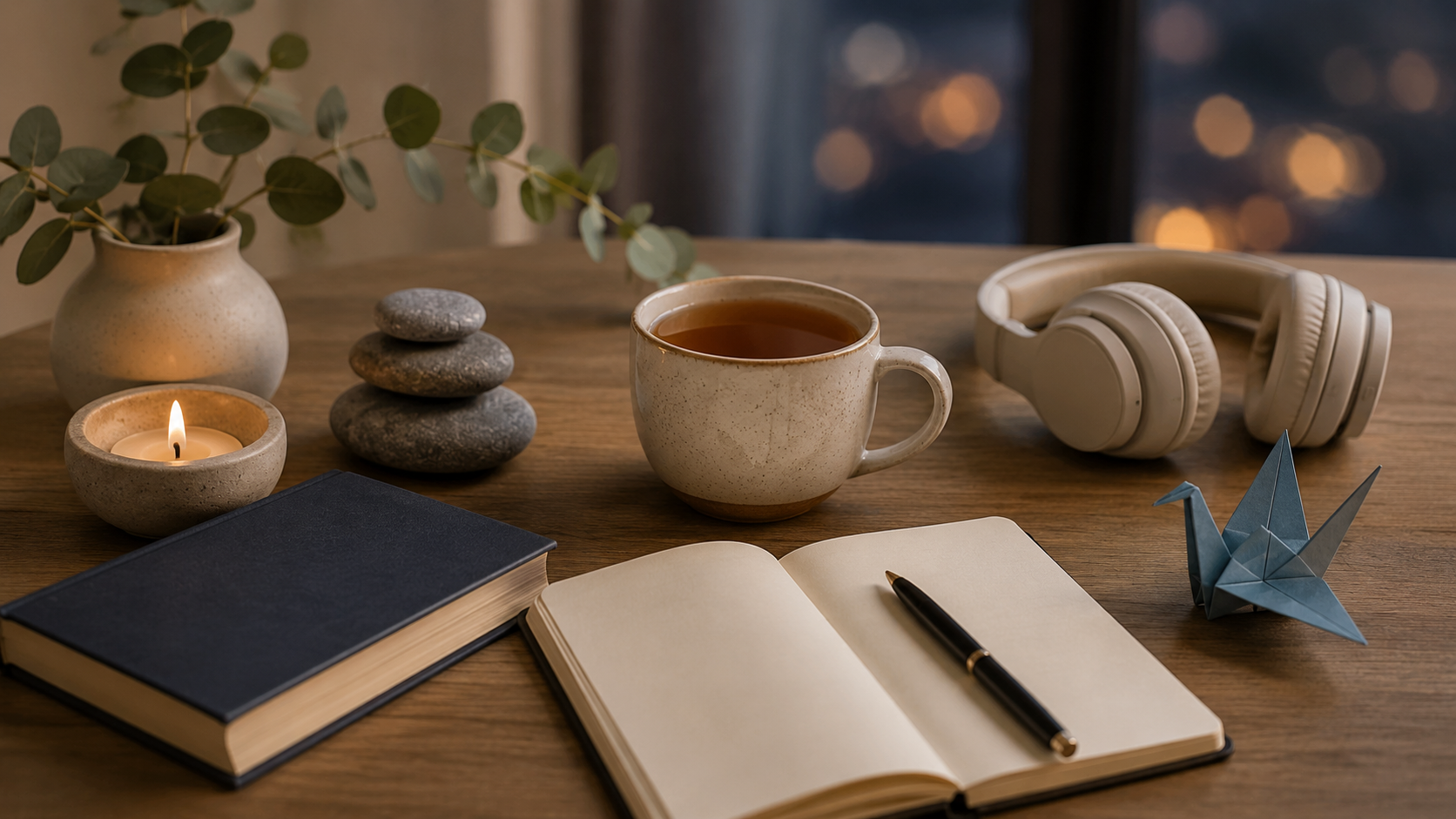
Choose relaxing hobbies by the kind of tired you are.
A mentally tired brain does not always need the same kind of calm.
At times, you need less sound. On other days, you need fewer choices. You might also feel physically restless, even though your mind feels done. In other moments, you are not exactly sad or stressed. You are just drained.
That is why a generic list of relaxing hobbies can miss the point. Instead, the better question is: What kind of relief would actually help tonight?
- Overstimulated: choose quiet, slow, low-input hobbies.
- Decision-tired: choose hobbies with one obvious next step.
- Emotionally heavy: choose comforting hobbies that do not ask you to explain yourself.
- Restless but tired: choose gentle movement or hands-on calm.
- Bored but low-energy: choose novelty without pressure.
How to Use This List
These are examples, not a rulebook.
Use the ideas below as patterns. The point is not to force yourself into one exact hobby. Instead, notice what lowers the mental load: fewer choices, softer input, gentle repetition, or a clear way to begin. If your bigger issue is finding something that fits short windows and normal weeks, start with Hobbies for Adults With Limited Time.
Restless Body
If your body is restless but your mind is tired, choose gentle movement.
Sometimes stillness feels impossible when your body has been holding stress all day. In that case, a relaxing hobby may need a little movement without becoming a workout.
- Slow stretching with no goal: repeat a few simple stretches without tracking flexibility or progress.
- Tiny calming corner reset: clear one small surface, fold one blanket, or arrange one chair so the room feels easier to be in.
- Light plant care: wipe leaves, rotate a pot, or check the soil on one plant shelf.
- Gentle rhythm practice: tap a slow beat, use a soft shaker, or hum along with one calming song.
Low Energy
If you are bored but low-energy, choose novelty without pressure.
Boredom does not always mean you need a big project. Sometimes you need something small enough to start, but fresh enough to wake up your attention.
- Beginner birdwatching from a window: notice one bird, sound, or movement without making it a research project.
- One-page curiosity notes: write a few observations about one small thing: the moon, a plant, a candle flame, or the weather.
- Clay pinch pots: use a small amount of air-dry clay and make one simple shape with your hands.
- Simple calligraphy strokes: practice lines, loops, or one letterform without trying to make a finished piece.
Be Careful With
Some hobbies look calming, but add more pressure.
A hobby can be beautiful and still be wrong for a mentally tired night. Therefore, watch for anything that adds performance, comparison, cost, or too many choices.
- Complicated crafts: if the instructions feel like homework, save it for a clearer day.
- Expensive self-care setups: relaxing should not require buying a whole new version of yourself.
- Tracking-heavy hobbies: if every session becomes a score, streak, or metric, it may stop feeling restful.
- Social-media-worthy projects: if you are imagining the post before you begin, the pressure may already be too high.
- Too many choices: if choosing the supplies takes longer than doing the hobby, simplify the setup.
For broader context, the National Institute on Aging notes that participating in activities you enjoy can support well-being as you age. Read more from the National Institute on Aging.
Small Test
A 15-minute test for relaxing hobbies for adults
Do not try to build a whole calming routine tonight. Instead, test one small hobby and notice whether your mind feels a little less crowded afterward.
Are you overstimulated, decision-tired, emotionally heavy, restless, or bored but low-energy?
Then choose the version with the fewest choices, lowest setup, and least pressure to finish.
Afterward, notice whether your breathing slowed down, your shoulders softened, or your mind felt less busy.
FAQ
Common questions about relaxing hobbies for adults
Use these questions to choose something calming without turning the choice into another task.
What are good relaxing hobbies for adults?
Good relaxing hobbies for adults reduce pressure and mental load. For example, try guided breathwork, calming audio, simple origami, adult coloring with limited colors, nature identification, flower arranging, slow stretching, or a small sensory ritual.
What hobby is best when I feel mentally tired?
Choose a hobby with very few decisions. In most cases, a guided audio session, one simple fold, one small plant-care task, or one calming playlist can work better than a hobby that asks you to plan, perform, or learn too much at once.
Should a relaxing hobby be productive?
Not necessarily. A relaxing hobby can be useful, but it does not need to produce anything impressive. On tired days, the return may simply be feeling more settled.
What if relaxing hobbies make me feel bored?
You may need gentle novelty instead of total stillness. In that case, try beginner birdwatching, one-page curiosity notes, a tiny clay shape, simple calligraphy strokes, or learning one small thing from nature.