Simple Evening Routines That Make Tomorrow Easier
Simple evening routines can make tomorrow easier without asking you to fix your whole life before bed. Instead, the goal is one small reset that helps the next day feel easier to enter.
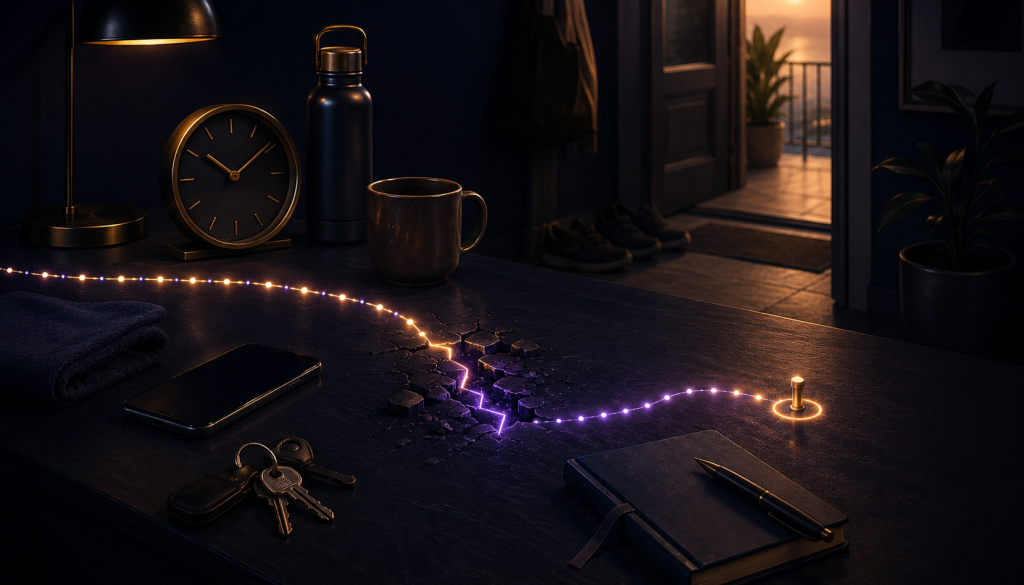
Close One Loop → Reduce One Decision → Set Up Tomorrow
Problem
Most evening routines fail because they ask too much from a tired brain
Simple evening routines often fail when they expect too much energy at the end of the day. By evening, you may already be carrying dinner, dishes, laundry, screens, messages, unfinished tasks, and the feeling that the day never fully closed.
Because of that, a long nighttime routine can feel like one more thing to keep up with. Even good advice can become heavy when it assumes quiet, patience, and focus you do not actually have.
So the starting point is not a perfect night. It is one small action that helps tomorrow feel less chaotic.
Quick Answer
The best simple evening routines make tomorrow easier, not tonight perfect
The best simple evening routines close one open loop, reduce one decision for tomorrow, or prepare one next step.
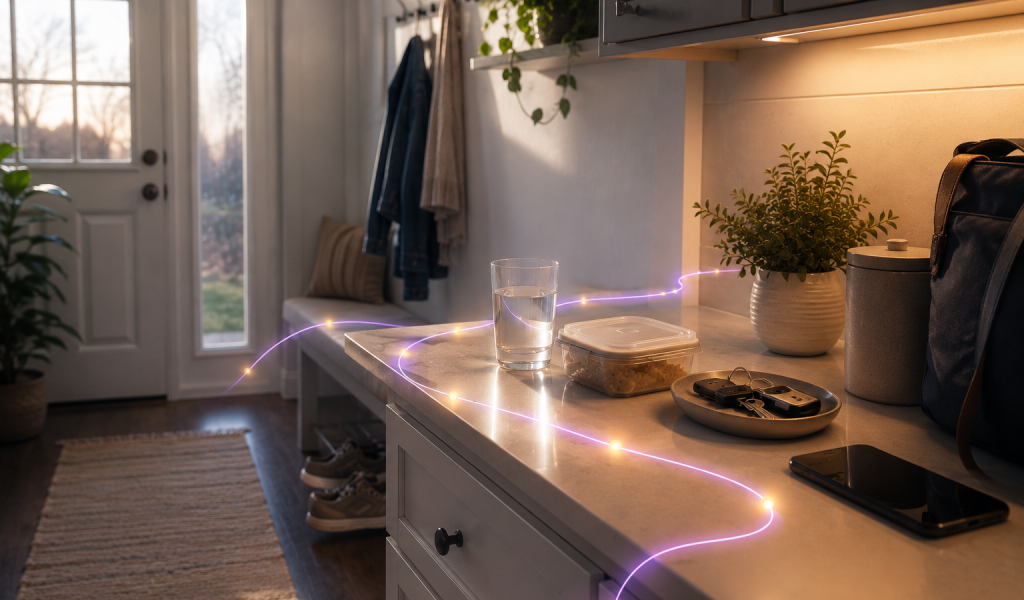
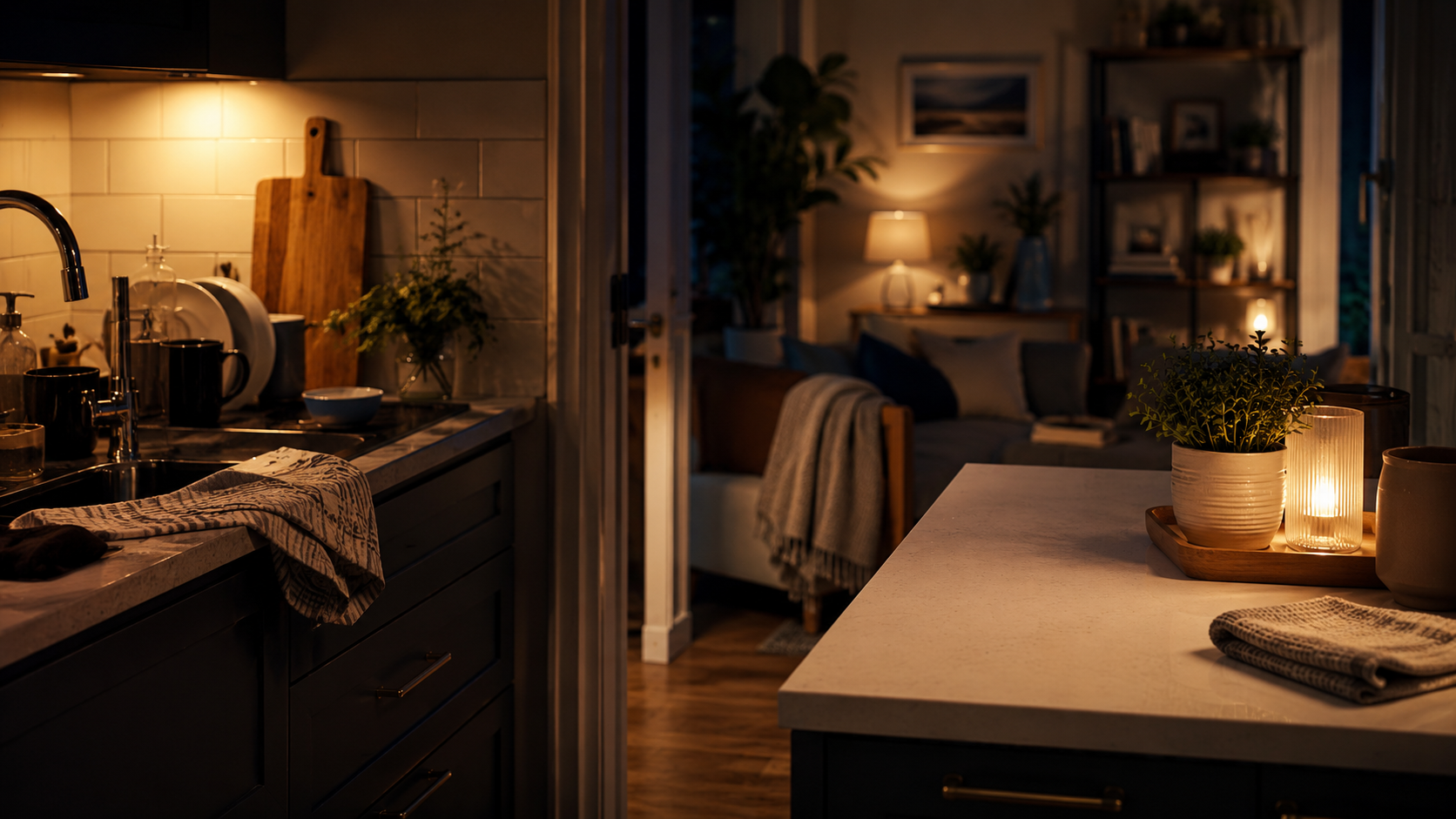
For example, you might clear one surface, set out one item, choose tomorrow’s first task, put essentials by the door, or make the kitchen easier to enter in the morning.
Instead of trying to reset your whole life before bed, choose the one thing tomorrow keeps tripping over.
Fit Lens
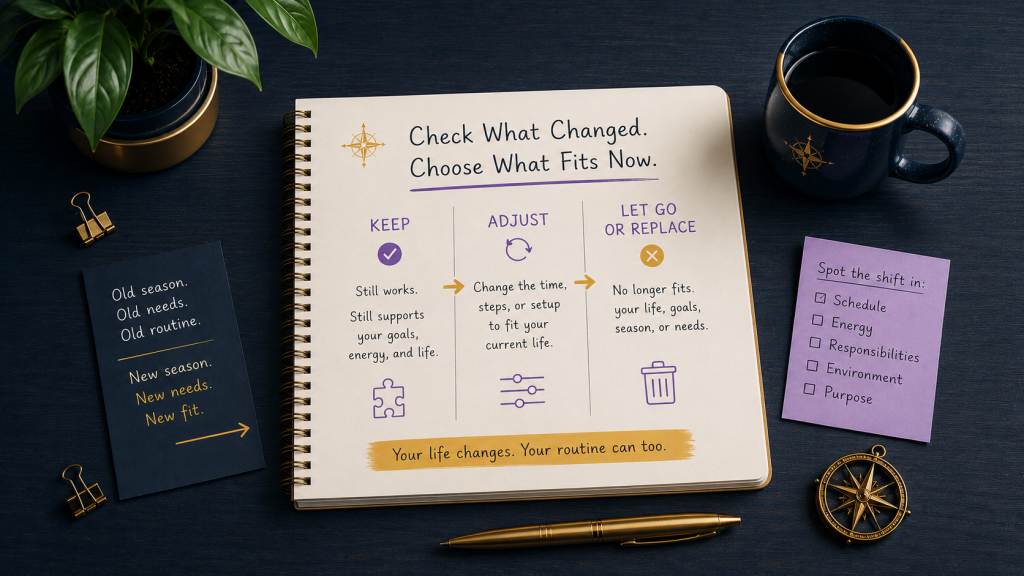
Choose your evening routine by what tomorrow usually needs
A useful evening routine does not start with copying a perfect nighttime schedule. Instead, it starts with noticing what usually makes tomorrow harder.
For the bigger routine system, use the main Build Better Routines page. This article stays focused on one specific problem: evenings that spill into tomorrow.
Tomorrow needs one obvious starting place so you are not searching before the day begins.
Tomorrow needs one calm surface or reset zone, not a whole-house cleanup.
Tomorrow needs one decision removed before your morning brain has to make it.
Tomorrow needs a clear re-entry point so work does not keep running all night.
Tonight needs the first bedtime cue earlier than the moment you are already exhausted.
Tomorrow needs a minimum evening reset that still lowers pressure.
How to Use This List
These evening routine ideas are starting points, not a full nighttime schedule
You do not need to build a complete evening routine tonight. Instead, choose one idea that makes tomorrow easier without turning the end of the day into another project. If mornings are the bigger struggle, read Morning Routine Ideas for People Who Hate Mornings next.
Be Careful With
Some evening routine advice makes nights feel heavier
Evening routine advice can sound calming and still become another burden at the end of the day.
For that reason, be careful with anything that asks you to turn the night into a productivity test before it makes tomorrow easier.
- Long self-care stacks: too many “good” steps can make the evening feel impossible.
- Full house resets: cleaning everything at night may create more pressure than relief.
- Complicated planning sessions: planning the whole day can keep your brain switched on.
- Making up for the whole day: the evening does not have to repair everything that did not happen.
- Routines that start too close to bedtime: exhausted brains do not need more steps.
- Routines that require quiet: many real homes are not quiet at night.
- Tracking too soon: adding tracking before the routine is stable can make it feel like homework.
- Turning the night into a test: your evening routine should lower pressure, not prove discipline.
Evening light and routine timing can affect sleep patterns. Also, the CDC notes that consistent sleep schedules, relaxing bedtime routines, and limiting bright light exposure in the evening are common ways to support sleep. Read the CDC’s sleep overview.
Small Test
A 10-minute test for simple evening routines
Use this before building a full nighttime schedule. The goal is to test one useful evening action that makes tomorrow easier to enter.
Start with rushing, mess, decisions, work carryover, bedtime delay, or low energy.
For example, use after dinner, after closing the laptop, after brushing teeth, after putting dishes away, after kids or pets settle, or after changing clothes.
Then, pick one thing that closes a loop, reduces a decision, or prepares a next step.
Do not add five more tasks just because the first one worked.
After that, notice whether tomorrow feels easier to enter before adding another step.
FAQ
Common questions about simple evening routines
Use these answers if you want an evening reset that makes tomorrow easier without building a long nighttime routine.
What is a simple evening routine?
A simple evening routine is one small repeatable action that helps close the day and make tomorrow easier. For example, it might clear one surface, reduce one decision, set out one item, or prepare one next step.
What should I do every evening to make tomorrow easier?
Choose one action that removes a common source of morning stress. For example, put essentials in one place, choose tomorrow’s first task, clear one counter, prep one breakfast item, or write one reminder.
How long should an evening routine be?
An evening routine can be 5 to 10 minutes. However, it does not need to be long if it closes one loop, reduces one decision, or makes the first step tomorrow easier.
What if I am too tired for an evening routine?
Use a minimum evening routine. Set out one thing, plug in one device, write one note, put one object where it belongs, or choose one first step for tomorrow.
What is the best evening routine for busy people?
The best evening routine for busy people is short and practical. Usually, one launch spot, one cleared surface, one shutdown note, or one first-task decision is enough to make tomorrow easier.
Should an evening routine include planning?
An evening routine can include planning, but it should stay small. Instead of planning the whole day, choose one first task, one priority, or one decision that will make tomorrow easier to start.
Next Path
Keep choosing by fit.
This article helps with evenings. Next, use the path that matches whether you need the full routine framework, more routine direction, or a broader starting point.