Creative Hobbies for Small Spaces
You do not need a craft room. You need a creative hobby whose supplies, working area, cleanup, and finished projects fit the home you already have.
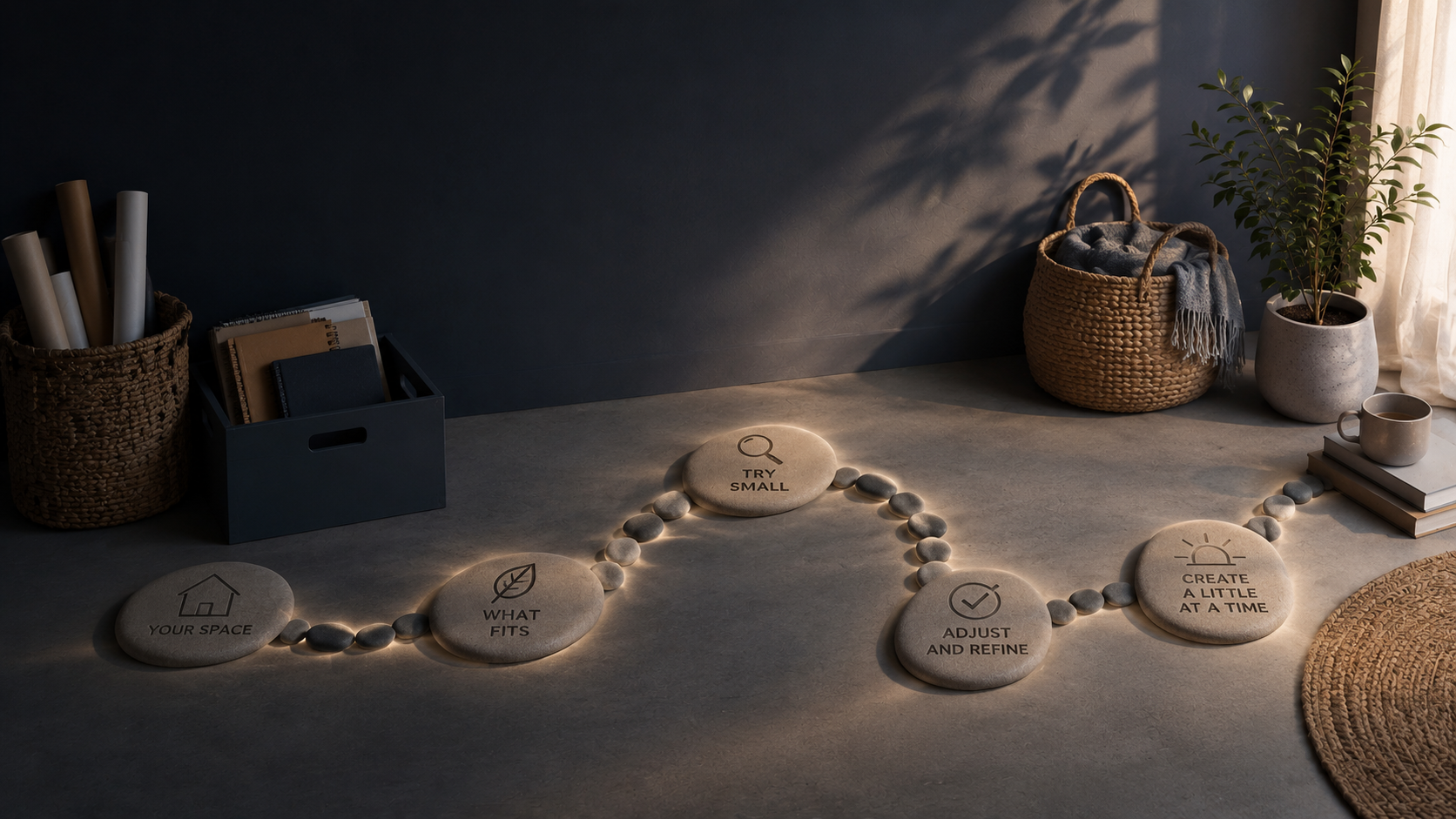
Check the Footprint → Choose a Fit → Test One Container
The Real Space Problem
Creative hobbies for small spaces must fit beyond the table
Creative hobbies for small spaces need to fit more than the table, counter, floor, or chair you use while making something. The supplies need somewhere to live, the project needs a safe stopping point, cleanup needs to be manageable, and the finished work needs somewhere to go.
That is why a physically small activity can still be a poor fit. A project may take up only one corner while you work, yet require several containers of materials, drying space, ventilation, or room for a growing collection of finished pieces.
Instead of asking only whether the activity fits inside your home, ask whether you can begin it, pause it, store it, clean it up, and return to it without making the room harder to use.
Quick Answer
Which creative hobbies work best in small spaces?
Creative hobbies work best in small spaces when they use one contained surface, require limited equipment, clean up quickly, and can be stored in one bin, bag, drawer, folder, shelf section, or digital device.
Strong options include sketching, visible mending, hand lettering, small embroidery, compact collage, phone photography, digital illustration, sound editing, zine-making, and other activities that can be paused without leaving the room unusable.
The Full Footprint
Check these five space demands before choosing a creative hobby
A hobby’s real footprint includes everything that happens before, during, and after the creative session. Looking at all five demands helps you avoid choosing something that technically fits but becomes frustrating to use.
How much surface or floor area does the active project require? A sketchbook may fit on your lap, while sewing or paper cutting may need a stable table that can stay clear for a while.
Where will the tools and materials live when you are not using them? A compact activity can still become a storage problem when materials multiply faster than the projects.
Notice how long it takes to begin and return the room to normal. If a 20-minute creative session requires 15 minutes of setup and cleanup, the hobby may become difficult to reach.
Can the work be closed, moved, stacked, or paused safely? Wet surfaces, loose pieces, sharp tools, and fragile stages make interruption more complicated in a shared or multipurpose room.
Decide what happens after the making ends. Finished work may be used, worn, displayed, gifted, digitized, photographed, recycled, or limited to one storage area.
Useful comparison: A sketchbook has a small working footprint, stores flat, and closes quickly. Candle making may use only one counter during the session, but wax, vessels, fragrance oils, pouring tools, cooling space, and finished candles create a much larger overall footprint.
Choose by Space Fit
Small-space creative hobbies organized by the problem they solve
This is not one generic list of activities. Each group solves a different space problem. Start with the one that removes the biggest obstacle in your home.
Choose one-container creative hobbies when storage is limited
One-container hobbies keep the essential tools and active project inside one box, pouch, basket, drawer, folder, or case. The container creates a visible boundary, so the hobby cannot quietly spread through the home.
- Examples Visible mending, hand lettering, small embroidery, paper cutting, hand sewing, miniature watercolor, and compact collage.
- Best when You have limited shelves, cabinets, shared storage, or no permanent hobby area.
- Watch for Buying duplicate tools or increasing the container size every time a new material looks useful.
Choose fold-away creative hobbies when you need the surface back
Fold-away hobbies can temporarily use a dining table, counter, coffee table, or floor mat. However, the full setup can be lifted, closed, stacked, rolled, or returned to storage when the session ends.
- Examples Sketching, zine-making, paper folding, portable weaving, small-format bookbinding, and hand sewing.
- Best when Your creative surface also serves several household jobs.
- Watch for Wet stages, loose pieces, or tools that make the project difficult to move halfway through.
Try digital creative hobbies when physical storage is the limit
Digital creativity removes most physical supply storage and finished-project clutter. However, it may still require file organization, software learning, screen time, or a device you enjoy using.
- Examples Phone photography, digital collage, digital illustration, sound editing, personal video essays, photo restoration, and digital memory keeping.
- Best when You have almost no physical storage available.
- Watch for Turning the activity into software research, equipment comparison, or endless tutorials.
Choose creative hobbies with useful results when projects accumulate
Some creative hobbies solve their own storage problem because the result is worn, used, mailed, repaired, gifted, or added to something you already own.
- Examples Visible mending, card making, decorated gift tags, hand-bound notebooks, small fiber projects, and customized household items.
- Best when You like physical making but do not want shelves full of finished work.
- Watch for Producing more than you can realistically use or give away.
Use low-storage creative hobbies when you do not want more objects
Creativity does not always have to produce a permanent physical object. Some practices create an experience, temporary arrangement, observation, performance, or digital record instead.
- Examples Movement improvisation, spoken storytelling, creative walks, temporary arrangements, sound play, observational photography, and found-poetry exercises.
- Best when You want creative engagement without collecting or displaying.
- Watch for Dismissing the activity because there is no permanent object at the end.
Hidden Space Demands
Creative hobbies for apartments that may need extra planning
These hobbies can still work in an apartment or small home. However, their hidden demands often include ventilation, drying time, bulky materials, protective equipment, or difficult cleanup.
Small finished pieces may still require molds, mixing tools, protective equipment, curing space, and careful ventilation.
Wax, fragrance oils, vessels, pouring tools, cooling space, labels, and completed candles can quickly expand the footprint.
Clay storage, dust control, drying boards, glaze, tools, and kiln access require more planning than the small hand-building area suggests.
The machine may fit on one table, while pattern storage, fabric cutting, pressing, scraps, and unfinished garments need additional room.
Albums are contained, but paper collections, adhesives, cutting equipment, photos, and decorative pieces can create a large supply footprint.
Canvases require room before, during, and after the session, especially while wet or waiting to be stored.
Activities involving adhesives, solvents, dust, fumes, or similar materials may require extra ventilation and safety planning. The U.S. Environmental Protection Agency’s indoor air quality resources provide additional guidance for activities done inside the home.
Small Test
Test a creative hobby in one bin before expanding it
The one-bin test shows whether an activity fits your space before supplies, unfinished projects, and expectations begin to grow.
Use a container you already own when possible. The goal is to test the practice, not build the perfect storage system.
Test small collage, visible mending, hand lettering, or another narrow version rather than an entire category.
Everything should fit in one bin, bag, drawer, folder, case, or device.
Decide where the activity will happen before taking out the supplies.
Complete, release, repurpose, or intentionally abandon it before beginning another.
Notice setup, interruption, cleanup, and storage as carefully as you notice enjoyment.
Adjust the Setup
Change the setup when the creative hobby fits but the space does not
A frustrating setup does not always mean the outlet is wrong. Before replacing the hobby, change the part that creates the space problem.
Move from large canvases to postcards, full garments to visible repairs, or large albums to individual memory pages.
Keep the essential tools together so beginning does not require searching through several rooms or storage areas.
Use a fixed paper size, small color palette, one stitch family, or one digital app.
Use a class, community studio, library, makerspace, or print shop for stages that require more room or specialized tools.
Decide whether each piece will be used, gifted, photographed, digitized, recycled, or limited to one display area.
Choose by Fit
The best small-space creative hobby is one you can return to
The right hobby is not necessarily the smallest activity on a list. It is the one whose full footprint works with your space, storage, energy, attention, and cleanup tolerance.
When the setup is contained, the stopping point is clear, and the finished work has somewhere to go, creativity becomes easier to reach again.
For the complete selection process, use How to Find a Creative Outlet That Fits Your Life .
FAQ
Common questions about creative hobbies for small spaces
Use these answers when you need a creative outlet that fits an apartment, shared room, multipurpose surface, or home without a dedicated craft area.
What are the best creative hobbies for small spaces?
The best creative hobbies for small spaces usually have limited supplies, quick setup, manageable cleanup, and finished work that is digital, useful, giftable, temporary, or easy to store. Examples include sketching, visible mending, hand lettering, small embroidery, phone photography, digital collage, and zine-making.
Can I have a creative hobby without a craft room?
Yes. A dedicated room is not necessary when the activity can fit on one temporary surface and return to one container, drawer, bag, folder, shelf section, or digital device afterward.
How do I keep hobby supplies from taking over?
Set a storage boundary before buying supplies. A one-bin, one-drawer, or one-shelf rule makes it easier to notice when the hobby is expanding beyond the space you intended to give it.
What creative hobbies make the least mess?
Phone photography, digital collage, sound editing, hand lettering, small embroidery, observational drawing, spoken storytelling, and creative walks usually create less physical mess than activities involving wax, clay, powders, wet paint, or large amounts of paper.
What should I do with finished creative projects?
Decide before starting whether the result will be used, worn, displayed, gifted, photographed, digitized, recycled, or limited to one storage or display area.
How can I test a hobby before buying supplies?
Try the one-bin test for three sessions. Use a small set of basic supplies, one working surface, and one unfinished project. Do not expand the setup until you know the activity fits your space and cleanup tolerance.
Next Path
Keep choosing by fit.
This article helps you solve the space problem. Continue with the path that gives you the level of direction you need next.